
How to calculate the number of sand woven bags needed for a retaining wall?
As a supplier of Sand Woven Bags, I often encounter customers who are unsure about how to calculate the number of bags required for their retaining wall projects. In this blog post, I'll guide you through the process step by step, ensuring you have a clear understanding of the calculations involved.
Understanding the Basics of a Retaining Wall
A retaining wall is a structure designed to hold back soil or other materials, preventing erosion and maintaining the stability of slopes. Sand woven bags are a popular choice for constructing retaining walls due to their affordability, durability, and ease of installation. Before you start calculating the number of bags, it's important to understand the basic components of a retaining wall:
- Height: The vertical distance from the base of the wall to the top.
- Length: The horizontal distance along the base of the wall.
- Slope: The angle at which the wall is inclined. A steeper slope will require more bags to maintain stability.
- Bag Size: The dimensions of the sand woven bags you plan to use. Common sizes include 50cm x 80cm, 60cm x 90cm, etc.
Step 1: Determine the Volume of the Retaining Wall
The first step in calculating the number of sand woven bags is to determine the volume of the retaining wall. This can be done by multiplying the height, length, and width of the wall. For example, if your retaining wall is 2 meters high, 10 meters long, and 0.5 meters wide, the volume would be:
Volume = Height x Length x Width
Volume = 2m x 10m x 0.5m
Volume = 10 cubic meters
Step 2: Calculate the Volume of a Single Sand Woven Bag
Next, you need to calculate the volume of a single sand woven bag. This can be done by multiplying the length, width, and height of the bag. For example, if your sand woven bag is 0.5 meters long, 0.3 meters wide, and 0.2 meters high, the volume would be:
Volume of a single bag = Length x Width x Height
Volume of a single bag = 0.5m x 0.3m x 0.2m
Volume of a single bag = 0.03 cubic meters
Step 3: Account for Compaction and Overlap
When filling sand woven bags, the sand will compact, reducing the overall volume of the bag. Additionally, when stacking the bags to form a retaining wall, there will be some overlap between the bags. To account for these factors, it's recommended to add a compaction factor of 10-20% and an overlap factor of 5-10%.
Let's assume a compaction factor of 15% and an overlap factor of 7%. The adjusted volume of a single bag would be:
Adjusted volume of a single bag = Volume of a single bag x (1 + Compaction factor + Overlap factor)
Adjusted volume of a single bag = 0.03 cubic meters x (1 + 0.15 + 0.07)
Adjusted volume of a single bag = 0.03 cubic meters x 1.22
Adjusted volume of a single bag = 0.0366 cubic meters
Step 4: Calculate the Number of Sand Woven Bags
Now that you have the volume of the retaining wall and the adjusted volume of a single sand woven bag, you can calculate the number of bags required. This can be done by dividing the volume of the retaining wall by the adjusted volume of a single bag.
Number of bags = Volume of the retaining wall / Adjusted volume of a single bag
Number of bags = 10 cubic meters / 0.0366 cubic meters
Number of bags ≈ 273
So, you would need approximately 273 sand woven bags to construct your retaining wall.
Considerations and Additional Tips
- Shape of the Retaining Wall: If your retaining wall has a curved or irregular shape, you may need to adjust your calculations accordingly. In some cases, it may be necessary to break the wall down into smaller sections and calculate the number of bags for each section separately.
- Quality of the Sand: The type and quality of the sand you use can also affect the number of bags required. Coarser sand may require more bags to achieve the same level of compaction as finer sand.
- Safety Factors: It's always a good idea to add a safety factor of 5-10% to your calculations to account for any unforeseen circumstances or variations in the construction process.
Our Sand Woven Bags
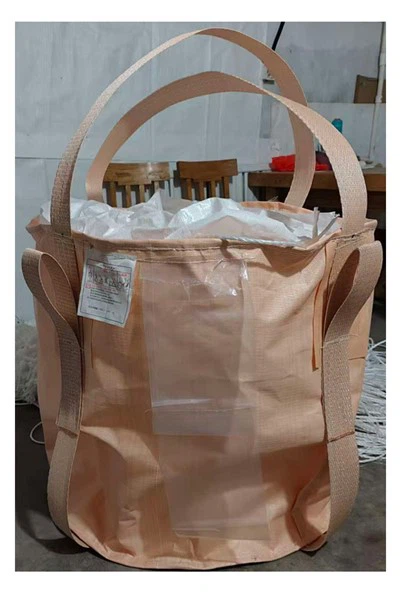
At our company, we offer a wide range of high-quality Sand Woven Bags that are suitable for various retaining wall projects. Our bags are made from durable polypropylene material, ensuring long-lasting performance and resistance to environmental factors. We also offer PP Woven Bag with Liner and Chemical Woven Bag for specific applications.


If you're planning a retaining wall project and need assistance with calculating the number of sand woven bags or have any other questions, please don't hesitate to contact us. Our team of experts is here to help you make the right choice and ensure the success of your project.
Conclusion
Calculating the number of sand woven bags needed for a retaining wall is a straightforward process that involves determining the volume of the wall, the volume of a single bag, and accounting for compaction and overlap. By following the steps outlined in this blog post and considering the additional tips, you can accurately estimate the number of bags required for your project. If you have any further questions or need assistance, feel free to reach out to us. We look forward to helping you with your retaining wall project.
References
- "Retaining Wall Design and Construction" by the American Society of Civil Engineers (ASCE)
- "Soil Mechanics and Foundation Engineering" by Braja M. Das